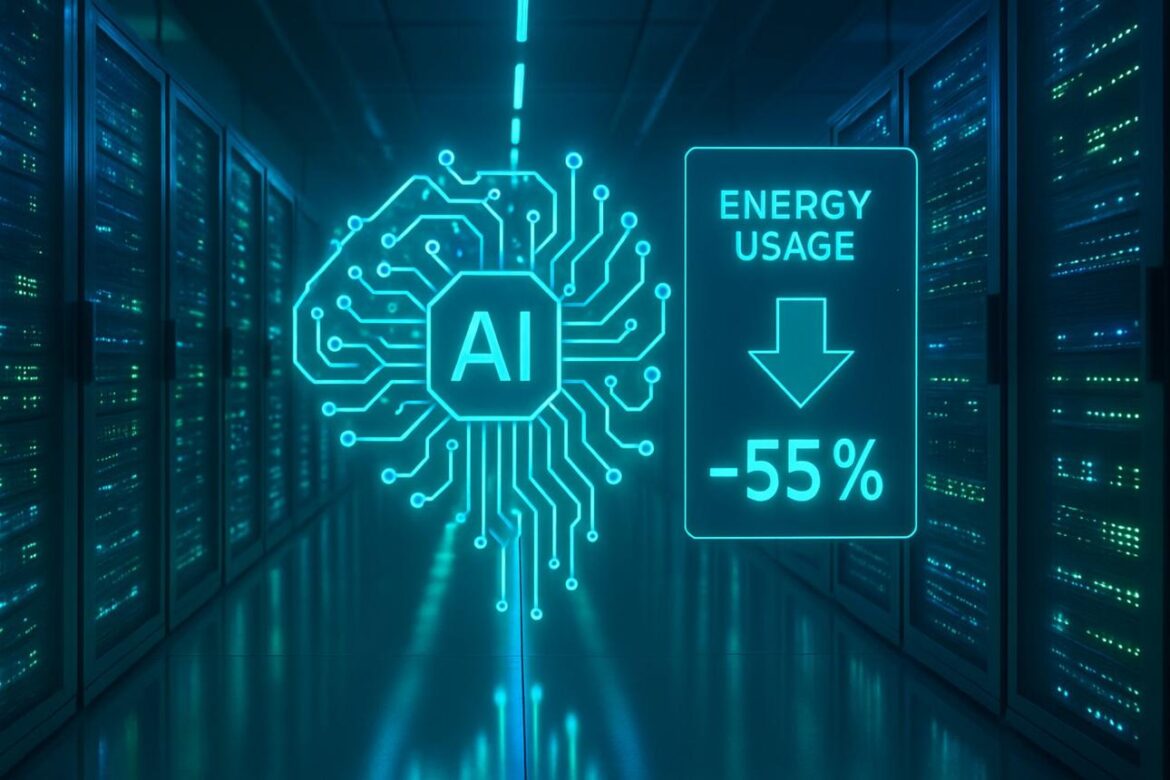
Exploring the Connection Between AI Growth, Data Centers, Electricity Consumption, and Sustainable Technology


Introduction: The Hidden Cost Behind the AI Revolution 🌍
Artificial intelligence is transforming the world at an incredible speed. AI assistants, autonomous systems, generative AI tools, and intelligent software are becoming part of everyday life.
However, behind every AI-generated image, every chatbot response, and every advanced machine-learning model lies a massive technological infrastructure that requires one essential resource:
Energy.
The rapid expansion of artificial intelligence has created a new challenge: the growing demand for electricity.
Training advanced AI models requires thousands of powerful processors operating continuously. Running AI services for millions of users requires enormous data centers filled with high-performance computing equipment.
As AI becomes smarter, the question is no longer only:
“How powerful can AI become?”
It is also:
“How much energy will AI require to continue growing?”
The AI revolution is creating an energy challenge that could reshape technology, infrastructure, and sustainability efforts worldwide.
1. Why AI Requires So Much Energy ⚡
Artificial intelligence depends on complex mathematical calculations performed by specialized computer chips.
Unlike traditional software, AI models learn by processing enormous amounts of information.
Large AI systems require:
- Powerful graphics processing units (GPUs)
- Advanced AI accelerators
- Massive storage systems
- High-speed networking equipment
- Cooling infrastructure
Every calculation consumes electricity.
The more advanced AI becomes, the more computational power it requires.
Training AI Models
Before an AI model can answer questions or create content, it must go through a training process.
During training, AI systems analyze:
- Books
- Websites
- Images
- Videos
- Scientific information
- Human conversations
This process may require thousands of computers working together for weeks or months.
The energy used during this process can be enormous.
2. The Growing Power Demand of Data Centers 🏢⚡


Data centers are the physical foundation of modern artificial intelligence.
They contain thousands of servers that store information and perform AI calculations.
A typical AI data center requires energy for:
Computing Equipment
Servers continuously process AI workloads.
Cooling Systems
Powerful processors generate significant heat, requiring advanced cooling technology.
Networking Infrastructure
Large amounts of data must move quickly between machines.
Security and Operations
Data centers operate 24/7 with backup systems.
As demand for AI services increases, companies are building larger data centers around the world.
3. Generative AI and the New Energy Challenge 🎨
Generative AI has introduced a major shift in computing demand.
Traditional software applications usually perform predictable tasks.
Generative AI systems must:
- Understand complex patterns
- Generate new content
- Process natural language
- Create images and videos
- Respond instantly to users
Every AI interaction requires computational power.
A single AI request may involve thousands or millions of calculations.
When millions of people use AI services daily, energy consumption increases significantly.
4. AI Chips: The Race for More Efficient Computing 🧠
One solution to the AI energy challenge is developing more efficient hardware.
Traditional computer processors are not designed specifically for AI workloads.
Modern AI systems use specialized chips such as:
- Graphics Processing Units (GPUs)
- AI accelerators
- Neural processing units (NPUs)
These chips are designed to perform AI calculations faster while reducing energy usage.
The Importance of Efficiency
Future AI development will depend not only on creating more powerful models but also on creating more energy-efficient systems.
The goal is:
More intelligence with less electricity.
5. The Role of Cooling Technology ❄️
One of the biggest challenges in AI data centers is heat management.
High-performance AI chips generate enormous amounts of heat.
Traditional air cooling systems may not be enough for future AI infrastructure.
Companies are exploring:
- Liquid cooling
- Advanced heat management
- Energy-efficient data center designs
- Smart temperature control systems
Better cooling technology can significantly reduce energy waste.
6. Renewable Energy and Sustainable AI 🌱


As AI demand grows, technology companies are investing in cleaner energy sources.
The goal is to build a future where AI growth does not create unnecessary environmental damage.
Renewable energy sources include:
- Solar power
- Wind energy
- Hydroelectric power
- Nuclear energy
Green Data Centers
Future AI infrastructure may focus on:
- Using renewable electricity
- Reducing water consumption
- Improving cooling efficiency
- Recycling heat from servers
Some data centers are exploring ways to reuse excess heat for buildings and local communities.
7. AI Could Also Help Solve Energy Problems 🔋
Although AI consumes significant energy, it can also improve energy efficiency.
AI systems can help optimize:
Power Grids
AI can predict electricity demand and balance supply more effectively.
Renewable Energy
AI can forecast:
- Solar production
- Wind patterns
- Energy storage needs
Industrial Efficiency
AI can identify ways to reduce energy waste in factories and buildings.
Smart Homes
AI-powered systems can automatically manage:
- Heating
- Cooling
- Lighting
- Appliance usage
In this way, AI is both a consumer of energy and a potential solution for energy challenges.
8. The Future of AI Infrastructure 🌐
The next generation of AI will require a new approach to computing infrastructure.
Future AI systems may depend on:
Smaller, Efficient AI Models
Instead of always using massive models, companies may develop smaller models that perform specific tasks efficiently.
Edge AI
Some AI processing may move from centralized data centers to local devices.
Examples:
- Smartphones
- Cars
- Smart home devices
This reduces the need to send every request to distant servers.
Specialized Hardware
Future chips will focus on maximizing performance while minimizing power consumption.
9. The Global Competition for AI Energy ⚡🌎
AI development is becoming connected to national energy strategies.
Countries and companies are competing to build:
- Advanced data centers
- Semiconductor facilities
- Energy infrastructure
Access to reliable electricity may become as important as access to computing technology.
In the future, AI leadership may depend not only on algorithms and data but also on energy availability.
10. Challenges Ahead: Can AI Grow Sustainably? ⚠️
The AI energy challenge raises important questions.
Environmental Impact
Increased electricity consumption could increase carbon emissions if powered by fossil fuels.
Infrastructure Pressure
Growing AI demand may place pressure on electricity networks.
Resource Usage
Data centers require significant resources, including water for cooling in some locations.
Balancing Innovation and Sustainability
The world must find ways to encourage AI development while protecting environmental goals.
The Future: Building a Sustainable AI Economy 🚀
The future of artificial intelligence will depend on balancing two goals:
Creating more powerful AI systems
and
Reducing their environmental impact.
Innovation in:
- AI chip design
- Renewable energy
- Data center efficiency
- Smart computing methods
will determine whether AI can grow sustainably.
The next technological breakthrough may not only be a smarter AI model.
It may be an AI system that achieves greater intelligence using dramatically less energy.
Conclusion: The AI Revolution Needs an Energy Revolution ⚡🤖
Artificial intelligence is changing the world, but every technological revolution has a hidden cost.
Behind the convenience of AI tools are massive data centers, powerful processors, and enormous energy requirements.
The challenge of the future is not stopping AI growth—it is making AI growth sustainable.
By combining efficient hardware, renewable energy, and smarter infrastructure, humanity can build an AI-powered future without creating an energy crisis.
The future of artificial intelligence will depend not only on how smart machines become, but also on how responsibly we power them. 🌱🚀