

Introduction
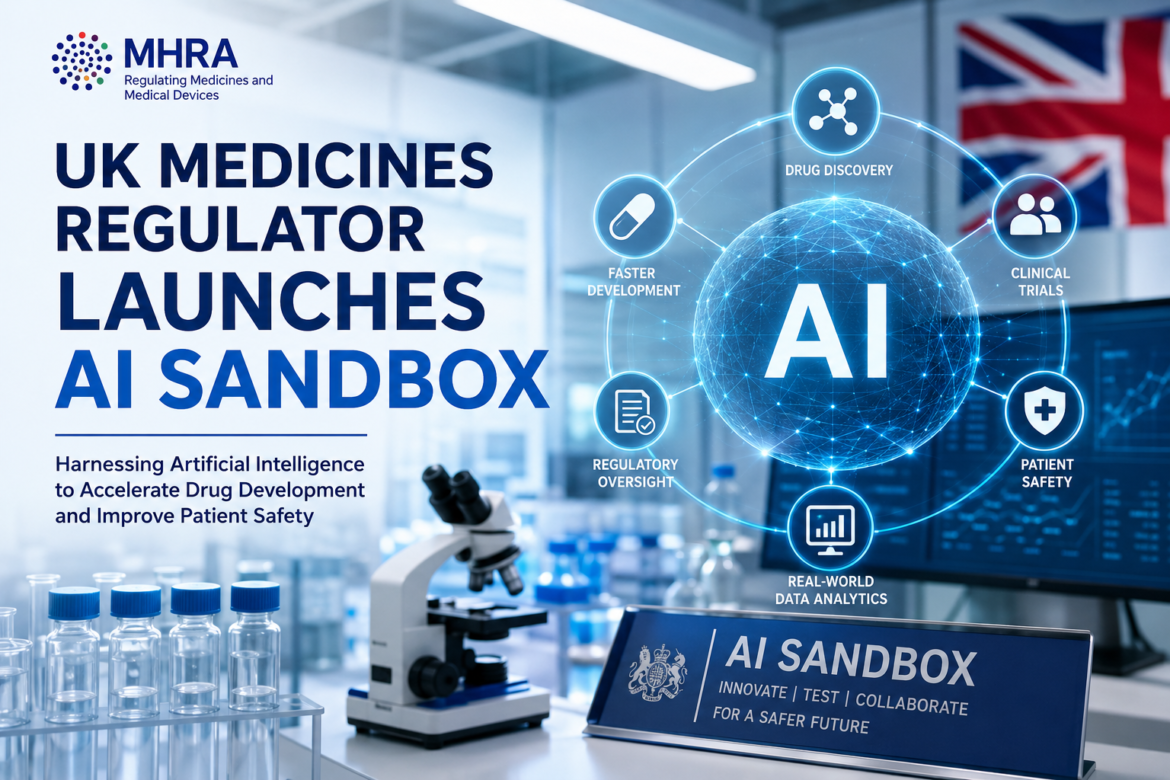
The United Kingdom has taken another significant step toward integrating artificial intelligence into healthcare and pharmaceutical innovation. The UK’s medicines regulator has launched a new AI sandbox program designed to explore how artificial intelligence can safely accelerate drug development, improve patient safety, and enhance regulatory processes without compromising oversight and public trust.
The initiative reflects a growing global trend in which regulators are seeking practical ways to evaluate emerging AI technologies before they become widely adopted. By creating a controlled testing environment, the regulator aims to help researchers, pharmaceutical companies, and technology developers understand how AI can be used responsibly throughout the medicine development lifecycle.
What Is the AI Sandbox Program?
The AI sandbox is a supervised environment where organizations can test artificial intelligence applications under the guidance of regulators. Instead of deploying AI systems directly into real-world healthcare settings, developers can evaluate their tools in a structured framework that allows regulators to observe performance, identify risks, and develop appropriate governance measures.
The program is expected to support innovators working on:
- Drug discovery and development
- Clinical trial optimization
- Patient safety monitoring
- Adverse event detection
- Regulatory compliance automation
- Medical data analysis
- Predictive healthcare models
The sandbox approach enables regulators and innovators to collaborate closely while ensuring that patient welfare remains the highest priority.
Why AI Matters in Drug Development
Drug development is traditionally a lengthy and expensive process. Bringing a new medicine from laboratory research to market approval can take many years and require substantial investment.
Artificial intelligence has the potential to transform several stages of this process by:
Accelerating Drug Discovery
AI algorithms can analyze vast datasets to identify promising drug candidates faster than traditional methods. Machine learning systems can detect patterns in molecular structures, biological pathways, and clinical data that might otherwise take years to uncover.
Improving Clinical Trials
Clinical trials often face challenges related to patient recruitment, monitoring, and data analysis. AI tools can help researchers identify suitable participants, predict outcomes, and streamline trial management.
Enhancing Data Analysis
Modern healthcare generates enormous amounts of data from hospitals, laboratories, and research institutions. AI can process and interpret this information more efficiently, helping scientists make informed decisions throughout the development process.
Reducing Costs
By automating repetitive tasks and improving research efficiency, AI can potentially lower development costs, making innovative treatments more accessible to patients.
Strengthening Patient Safety
One of the primary goals of the sandbox initiative is improving patient safety.
Artificial intelligence can support safety monitoring in several ways:
Early Detection of Side Effects
AI systems can continuously analyze reports from healthcare providers, researchers, and patients to identify potential safety concerns more quickly.
Real-Time Monitoring
Advanced analytics can help detect unusual patterns that may indicate adverse reactions or emerging risks associated with medicines.
Better Risk Assessment
Machine learning models can evaluate large datasets to identify patient populations that may be more vulnerable to specific side effects, allowing healthcare professionals to make more informed treatment decisions.
Improved Regulatory Decision-Making
Regulators can use AI-powered insights to strengthen evidence-based decision-making while maintaining rigorous evaluation standards.
The Importance of Regulatory Oversight
While AI offers substantial opportunities, it also introduces new challenges.
Healthcare decisions directly impact human lives, making regulatory oversight essential. The sandbox program is designed to ensure that AI systems meet high standards of:
- Accuracy
- Reliability
- Transparency
- Fairness
- Security
- Accountability
Regulators must understand how AI models make decisions, what data they use, and whether their outputs can be trusted in clinical settings.
The sandbox environment allows experts to identify potential weaknesses before technologies are deployed at scale.
Benefits for Pharmaceutical Companies and Innovators
The AI sandbox provides several advantages for organizations developing healthcare technologies.
Faster Regulatory Feedback
Companies can engage directly with regulators during development, helping them address concerns earlier in the innovation process.
Reduced Uncertainty
Developers gain a clearer understanding of regulatory expectations, reducing compliance risks and accelerating product development.
Encouraging Innovation
By providing a safe testing environment, the sandbox encourages experimentation and responsible innovation without exposing patients to unnecessary risks.
Building Public Trust
Transparent evaluation processes help demonstrate that AI systems are being developed responsibly, strengthening public confidence in new technologies.
Global Significance of the Initiative
The UK’s move is part of a broader international effort to establish frameworks for AI governance in healthcare.
Around the world, governments and health authorities are exploring ways to balance innovation with safety. Regulatory sandboxes have already been used in sectors such as finance and cybersecurity, and healthcare is increasingly adopting similar approaches.
The initiative positions the United Kingdom as a leader in responsible AI regulation and could influence how other countries evaluate healthcare AI systems in the future.
Challenges That Remain
Despite the promise of AI, several challenges must still be addressed.
Data Quality
AI systems depend heavily on high-quality data. Inaccurate or incomplete datasets can lead to unreliable results.
Bias and Fairness
Algorithms trained on unrepresentative data may produce biased outcomes, potentially affecting healthcare equity.
Transparency
Many advanced AI models operate as “black boxes,” making it difficult to understand how decisions are reached.
Privacy Protection
Healthcare data is highly sensitive. Robust safeguards are necessary to protect patient information and maintain public trust.
Regulatory Adaptation
As AI technologies evolve rapidly, regulators must continuously update their frameworks and expertise to keep pace with innovation.
Future Outlook
The launch of the AI sandbox represents a significant milestone in the evolution of healthcare regulation. By creating a collaborative environment where regulators and innovators can work together, the UK is laying the foundation for safer and more effective AI adoption in medicine.
If successful, the initiative could accelerate the development of new treatments, improve patient outcomes, and establish best practices for AI governance worldwide. The lessons learned from the sandbox may help shape future regulatory standards and contribute to a healthcare ecosystem where innovation and safety advance hand in hand.
Conclusion
The UK’s medicines regulator has launched an ambitious AI sandbox program aimed at exploring how artificial intelligence can transform drug development and patient safety while maintaining rigorous regulatory oversight. By providing a controlled environment for testing innovative AI solutions, the initiative seeks to unlock the benefits of advanced technologies without compromising public trust or healthcare standards.
As pharmaceutical companies, researchers, and regulators collaborate within this framework, the program could become a model for responsible AI adoption in healthcare. The success of the sandbox may ultimately help bring safer medicines to patients faster, while ensuring that innovation remains aligned with transparency, accountability, and patient welfare.